The Storyteller Series #2 - Rebecca Fortuna, Intimacy Coordinator
#2. Rebecca Fortuna, Intimacy Coordinator
Finding new ways to tell intimate stories
Creative Medium: Physicality, Communication & Trust
FADE IN.
INT. ZOOM - MORNING
Rebecca is chatting with Rachael in a rare pocket of free time.
REBECCA
Gone are the days of these beautiful sex scenes where the clothes just magically fall off, and they’re having sex and everybody climaxes at the same time.
She shakes her head.
RACHAEL
Audiences can see right through that.
REBECCA
Especially young audiences who are watching thinking - that's not my experience. What's wrong with me?
RACHAEL
It’s never that perfect in real life.
REBECCA
Exactly. It’s messy, they’re exploring, they’re finding each other. When I’m working with actors and directors, I’m often asking - hang on, how are they all of a sudden having sex? They just had their clothes on a second ago. How did their underwear come off? Sometimes steps get missed and it’s like, where’s the lube?
Rachael throws her hands up in agreement.
RACHAEL
Won’t somebody think of the lube?

As audience members, we’ve all had moments when an intimate scene is playing out on the screen or the stage in front of us, and we almost want to cover our eyes to hide from the discomfort. An awkward touch, a visibly uncomfortable actor, or like the scenario Rebecca and I chatted about above, a completely unbelievable set of circumstances. A poorly executed intimate moment can instantly pull us out of the story. And behind the scenes, even if the acting may look completely normal and natural to an audience, actors have often been expected to just accept whatever is asked of them even if it’s made them feel uncomfortable. A ‘good actor’ always says yes, we were taught in drama school. A ‘good actor’ doesn’t question, doesn’t cause a scene. If only I had a penny for every time I was told this or heard it said to a colleague during my early years as an actor! I think I’d internalised that pleasing everyone around me and not taking up too much space, not being a problem, not causing a scene, meant I was doing my job well. God forbid you dared to speak up lest you be labelled a diva. A trouble-maker. Or perhaps the worst, a difficult actor to work with. A ‘good actor’ has often been expected to completely surrender themselves to the needs and desires of their character (and the director’s vision), leaving their own thoughts, feelings and opinions at the door.
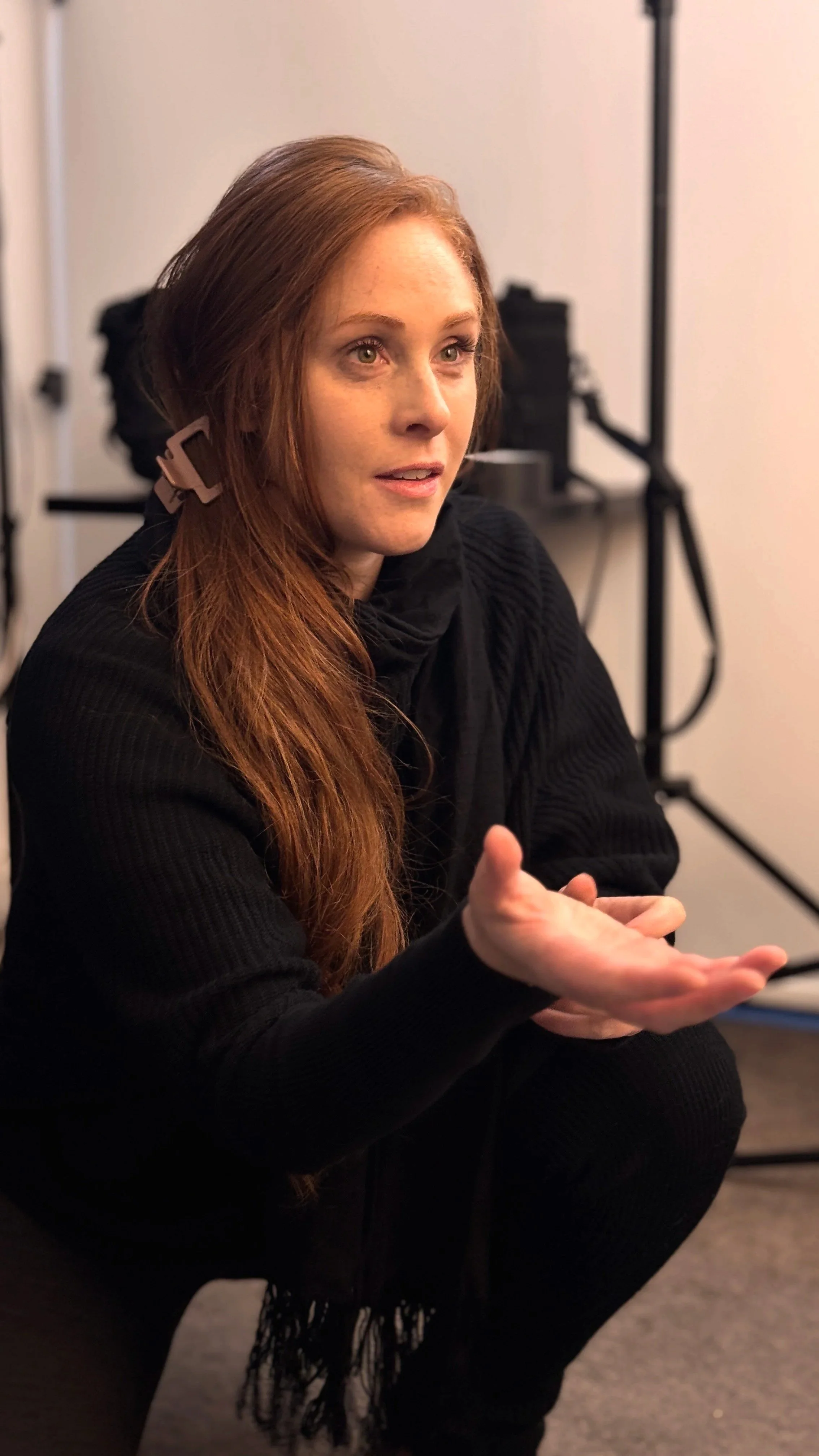
Those expectations, thank God, are now changing. Intimacy coordinator Rebecca Fortuna, has dedicated part of her career to helping shift the way intimate scenes are approached on both film sets and theatre stages. Alongside her work as an actor and acting coach, Rebecca spends her days either telling, or helping other creatives tell more authentic stories.
It was after an awkward experience on set as an actor that the idea to pursue intimacy coordination as a career was sparked. The #MeToo movement had recently begun and one of her scenes involved sex and nudity. “It was a crew of predominantly men and they were so afraid of getting it wrong that everybody was kind of stepping back and too afraid to say what the scene required. I wasn’t getting the information I needed to be able to do my job. It was awkward. So I called the DOP and the director over and told them I needed to know what the scene actually was. What were we shooting? What angle were we shooting from? Because it was a sex scene, I was like, where are we in the act? How long is it going for? Are we reaching climax? So then the actual filming was great. I was able to do what I needed to do because I had all the information.” It left her thinking there had to be a better way of handling these types of scenes.
Coincidentally, around that same time, Ita O’Brien - one of the pioneers of intimacy coordination - was visiting Australia giving a talk about the role. Intimacy coordinators (or ICs) had been around for some time, but since the #MeToo movement, the role had been gaining momentum. “I was listening to Ita talk and I was like, this is it. This is exactly what I needed on that set. I called the director and was like, there’s a better way to do these types of scenes. There’s guidelines. He was really excited.” Rebecca applied for Ita’s workshop and began her training. “I was just like, yep, this is my calling. I have to do this. It brings together all of my passions and experience as an actor and a choreographer. I also have a law degree, so it brought in my law and advocacy background. It was all of my skills in a nice little package. I knew our industry needed this. And I wanted to be part of pioneering the change in Australia.”
What Rebecca experienced on that film set were the foundations of the idea behind intimacy coordination – that having the right boundaries in place don’t restrict creative freedom, they create the conditions necessary for it. Since the rise of the profession in 2018, having an intimacy professional on set or as part of rehearsals for a theatre production has now become standard practice for major commercial productions. Just as you wouldn’t film a fight scene without the right safety precautions in place, the same care and attention is now being given to the more emotional and intimate aspects of actors’ work. An intimacy professional can be involved in any scenes that involve nudity, simulated sex, any form of intimate physical contact or heightened vulnerability. “The basis of our work”, Rebecca says, “is making sure that there is consent and communication leading up to a shoot or a performance. We’re asking what's the story? What’s happening in this scene? What's the context? Why is there nudity? Why is there simulated sex? How is that furthering the story? So that on the day, everything has been communicated, everyone knows exactly what’s being asked of them and there are no surprises.”
The old notion of an actor being a yes-person; a pawn who simply follows directions, is being gently moved on from. Rebecca says a large part of her role is to assist the director to make sure their vision is being upheld, but also to make sure the actors are checking in with each other and themselves, navigating conversations around consent and always making sure they're comfortable in the positions they’re being put into. “I always say to actors if something's not working for you, you can ask for another option. Don’t just push through it because you're afraid to speak up, or you don’t want to be seen as difficult to work with.”
She then shares with me a line she learned from her own mentors. A line that completely catches me off guard. As a former actor, as a screenwriter, even as a human being – I’ve never heard the idea phrased in such a simple yet profound way:
Your no is a gift, so your yes can be trusted.
I ask her to say it again.
Your no is a gift, so your yes can be trusted.
In that moment, I want to travel back in time and whisper it into the ear of my younger actor self. I want every acting coach I ever met to hear it and let it land. I want every director, every writer, and every other creative to let it guide them. How refreshing. How different to everything I was taught. How grateful I feel that practitioners like Rebecca exist, and are encouraging this kind of self-respect and autonomy in the work.
“So I say to them, it's okay to say no. It's okay to check in with yourself and go, actually, I don't want to do this. Instead of ‘yes and…’, we say ‘no but…’”
I’m caught off guard for a second time.
Instead of ‘yes and…’, we say ‘no but…’
“No, I don't want to do that, but what about this? No, I don't want you to touch my left shoulder, but could you touch my arm instead? Saying no to something is actually a creative opportunity, not a block. It allows us to find different ways of telling stories, so we don’t just keep doing things the same way and making all intimacy look the same. I say to actors, ‘Make this moment unique to your character, your story, your life, and your body.’”
The irony is that within the safety of the created boundaries, freedom of expression has more room to be explored. Just like a dancer learns a choreographed routine, or a fight scene is carefully planned, intimacy coordination creates a framework of consent and expectations for actors to rely on – this is where body parts are going to be, this is the level of nudity required, this is the type of contact that’s been agreed upon. “Then once the actors feel safe, and know generally what’s going to happen in the scene, they can begin to layer on their character, their emotional life, their journey and find spontaneous and interesting ways of telling the story.”
I think back to intimate scenes I’ve performed in the past where an intimacy coordinator hasn’t been present. One part of me would be right there in the scene with my partner, wanting to fully disappear into the character and leave my actor brain side of stage, but I was never fully able to do it. There’d always be an aspect of self-protection, hyperaware of where my partner was in the space, what they were doing, how we were interacting. If we’d had the framework and guidelines around consent, boundaries and expectations, maybe I would’ve felt safer to fully surrender to the moment, as I was always so desperately wanting to do. This was the missing piece. Just as the costuming, set design, lighting, music, makeup and direction all exist to help an actor tell the story, intimacy coordination is just as important – creating safety and trust between actors to allow their over-thinking actor brains to switch off, step out of the way and let the storytelling be as authentic as possible. “When the trust has been built,” Rebecca says, “the dynamic between the characters can really flow. Suddenly, the story is alive.”
She also speaks of finding nuance in the unspoken moments. “That's what's so beautiful about intimate storytelling. It’s finding ways to tell the story through the body, being able to get deeper glimpses into the character’s experience without them having to say anything. It could just be a little flinch, or a giggle, or something that says – this is new for this person, or these characters haven’t touched each other like this before.”
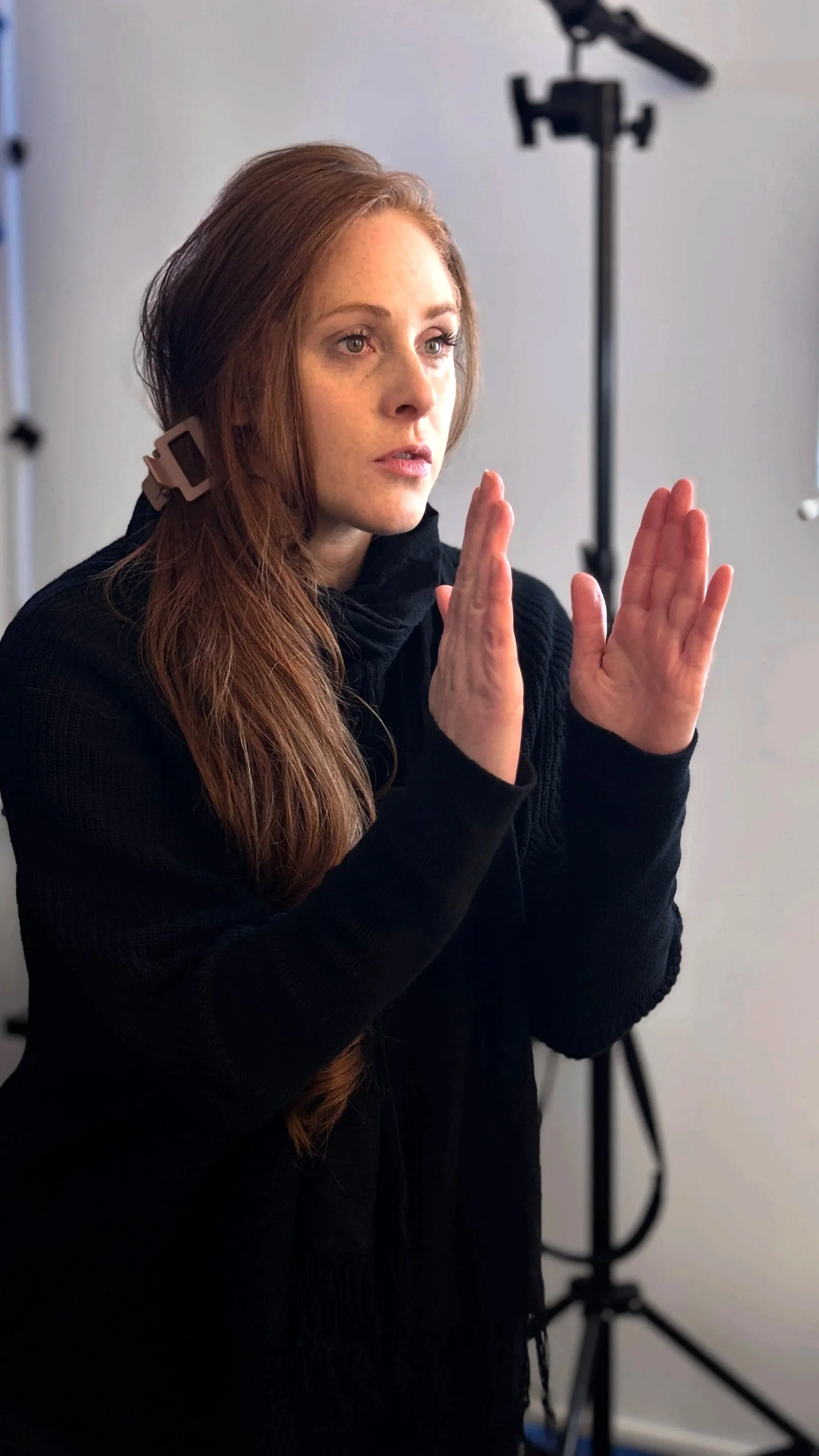
The purpose of even having intimate scenes included in a script is now being interrogated. “Back in the 70s and 80s, it was just like – boobs! We haven’t had boobs for twenty minutes. This scene needs boobs, boobs, more boobs! It was just sex and nudity for the sake of it. But now we’re very much challenging that, and asking – what can this type of scene reveal about the character? How does this propel the story forward? What value is it adding to this story? We always want these scenes to have a purpose and to avoid them being gratuitous or just from the male gaze.”
In a somewhat meta fashion, conversations about consent and boundaries are now finding their way into fictional storylines. You could argue that one of art’s purposes is to reflect humanity back to itself, and this is a beautiful example of that happening. But not everyone in the industry was into the idea, Rebecca says. “There was pushback at the beginning. People were saying consent can't be sexy. And we were like, oh, consent can be really sexy. Just watch.” Before seeing that now-infamous Bridgerton carriage scene, I might have been one of the doubters. But that scene is hands-down one of the hottest moments I’ve ever witnessed on a screen (Colin & Penelope for life!) “Heated Rivalry is another perfect example”, Rebecca says. “The characters are constantly checking in with each other – do you like this? Is this okay? And it's still hot and steamy and exactly what it needs to be.” We’re being shown over and over that communication and consent can be integral to intimate scenes rather than obstacles to them.
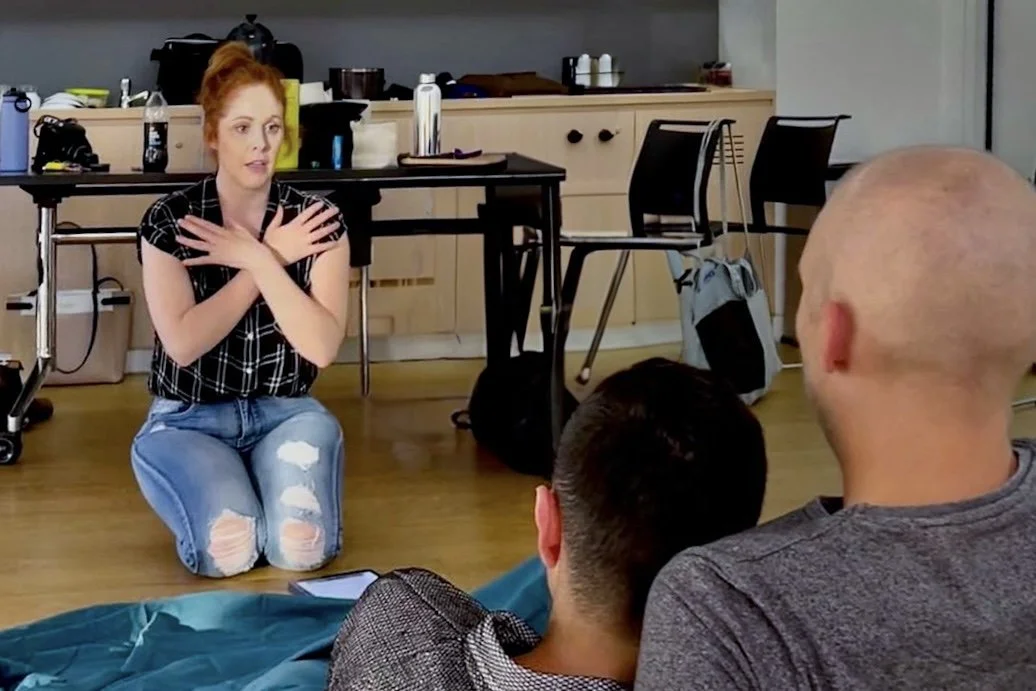
Rebecca describes the process of a story coming to life on stage or screen as one giant, collaborative group project. “My role is understanding that it’s not my story to tell, it’s not my vision. I’m there to facilitate, but it’s the writer's story, the director's vision, and the actor's interpretation.” She also sees her role as being able to educate the next generation of creatives about intimate storytelling before they even make it onto a professional stage or set. “Students should be learning about their boundaries and consent in high school – how to check in, how to have those conversations, how to say no.” The education then needs to continue at university level, Rebecca says. She's been teaching actors in full-time programs about the intimacy guidelines. “Each year I go back, I ask if they’ve heard of what an intimacy coordinator is. From that first year where no one had heard of it, to now, it's getting a lot more attention, so people know what it is.”
But it’s not only actors who need to learn, Rebecca says. It’s teaching directors and producers what they need to consider around intimate scenes, and when to bring an IC on. It’s teaching writers how to actually write authentic intimate scenes. “It's the writer who’s the catalyst for the story. So we need to be getting it right at that stage.” This intrigues me, because during my training as a screenwriter, we were never taught how to write intimacy properly. I’ve always been conscious of not over-writing directions into a script, always wanting the actors and director to be able to find their own creative freedom, but Rebecca makes a good point – “No, you don't want it to be overwritten, but at the same time, you don't want it to be so under-written that it just says - they have sex. Or they remove the clothing and they have sex.” It’s now clear to me why she believes this training should be mandatory in all programs. By teaching all storytellers to approach intimacy with greater thought and care, we’ll be paving the way for safer, more authentic stories to be told well into the future.
For someone who spends her life immersed in stories from all different angles, I’m eager to ask her my final question:
RACHAEL
So why do you think we tell stories as artists?
REBECCA
I think we tell stories because it's the oldest mode of communication.
I think we tell stories because we need to share experience.
It's a chance for people to be seen and heard, and to see themselves represented.
It’s so powerful to see yourself represented in a story.
I also think we pass on these stories to learn and to grow as human beings.
To remember, and to hopefully learn from the past and not repeat it.
FADE TO BLACK.
Thank you for reading this article.
If you’d like to read new editions of The Storyteller Series as they’re published, subscribe to my monthly newsletter below.